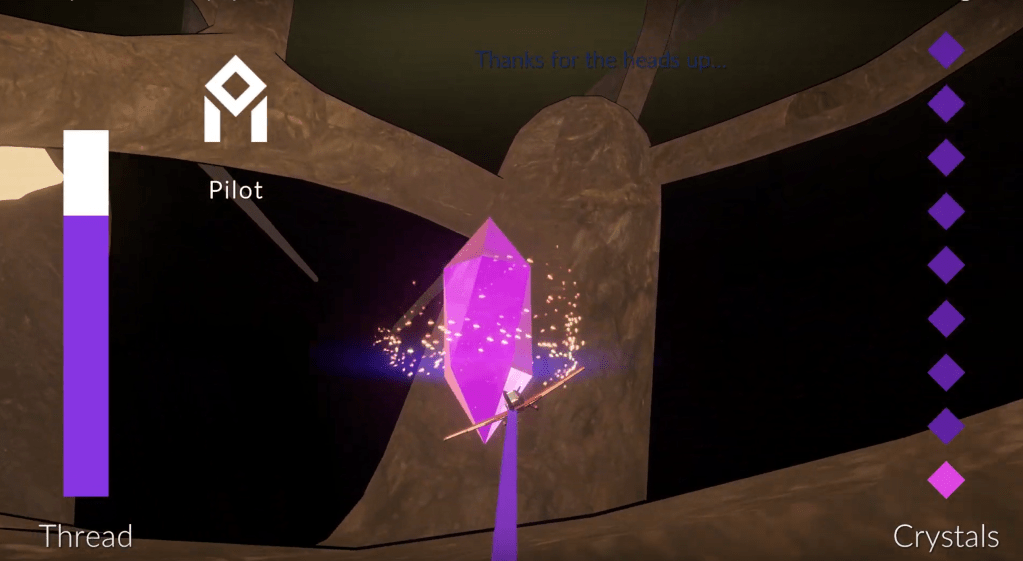
What were we trying to accomplish and what did we do to pursue the goals we set for ourselves?
This is our first project for the second semester of this thesis. We ended 2023 with a prototype and a topic — to recap, our goal is to spend the entire semester making one game about hyperreality. We allocated three weeks to do some divergent prototyping based on what we learned from The Tower. As a part of this process, we opened back up the discussion on the nature of hyperreality to figure out which specific part of it we wanted to engage with. The Tower was not a pointed enough experience to communicate what it feels like to live in a hyperreal world, but we were unsure about just making something that creates the gross feelings of being on social media. We dove into this part of the conversation and found vocabulary for the specific part of present hyperreality that makes things gross and ended up identifying it as “capitalist-hyperreality”. This allowed us to zoom in a bit more closely and scrutinize the character of hyperreality that has negatively interfered with our lives in the past (and present). From this understanding we brainstormed and decided to try to make a game that tells a specific, pointed story about the experience of coming of age in a capitalist-hyperreality. We wanted to make something character driven with a set linear narrative to narrow in on making a specific impact through a story. Our hope was that by providing a prewritten player character, we could more clearly signpost for the person playing what happens/what it feels like to grow up in a capitalist-hyperreality. Part of this approach is because we have the end goal of putting whatever we make on Steam and figured that something more narrative driven would read well (more on this later).
An aside and elaboration on what we mean by “capitalist-hyperreality”:
Some of how we define capitalist-hyperreality is by identifying what hyperreality isn’t or doesn’t do by “default”. This is tricky because hyperreality is theoretically any combination of elements that is a subset of Reality but isn’t Reality itself. (When we say Reality, we are referring to the idea of an “objective Reality”, which an acceptance of hyperreality tends to believe in.) In essence, hyperreality is defined as our personal perceptions that are fundamentally an abstraction of Reality based on the sights, signs, and symbols we consume. It is a derivative version of Reality that comes about as a result of interpretation. Interpretation and perception is a fundamental quality of our humanity; interpretation causes hyperreality which indicates that hyperreality is dispositionally part of our humanity. The reason we identify the capitalist subset of hyperreality is because it does not belong to a single person but is rather the broader societal context [hyperobject] that contains much of the current world. In simpler terms, capitalism can be understood as a big thing that much of humanity lives in, and it provides a specific filter to hyperreality. For example, advertising is something that is generally present in everyone’s life, but the nature of advertising is mostly shaped by capitalist-hyperreality as opposed to a more “default” hyperreality.
To add additional nuance, the idea of a “default” hyperreality is not really something that exists practically – it is a theoretical model that we have found helpful in our discussion. Since every version of hyperreality will be distorted through some social lens, economic structure, and/or general worldview, we only ever have specific, non default, hyperrealities to look at and investigate. Despite this, using the model of a “default” hyperreality, we can understand which additional lenses (such as capitalism) are creating the specific distortion of hyperreality. This has made it easier for us to identify specific aspects and traits of the broader hyperreality we share [as students at an American university, denizens of the internet, and people generally seeking employment in a capitalist economy] that currently shape our experience of the world.
How is this related to this game? “Default” hyperreality comes with a belief that there might be a Reality, but that your individual hyperreality (how you as a person understand the signs and symbols that comprise you and your life) is not that Reality. Capitalist-hyperreality expects you to buy into the “Reality” in which you are the most optimally productive and calls that hyperreality, Reality [when it isn’t Reality, it is “Reality” because it is a hyperreality]. Instead of letting you understand your hyperreality, capitalist-hyperreality separately calls your hyperreality, and other peoples’ hyperrealities, Reality [which they aren’t]. This might seem a small distinction, but it accounts for the incredibly disorienting experience that is social media. As you might scroll through TikTok, you are bombarded with opinions that are presented in a way that first catches, then retains your attention — implicitly because this is the specific way of presentation that generates maximum revenue. For example, this means that one of the mechanisms for the exchange of ideas [TikTok] is set up such that it is the most profitable instead of being set up to allow for the exchange of ideas that contain the necessary space and nuance. This means that ideas that do not fit well into a 1-3 minute video that can be initially presented with a catchy hook will simply remain unseen. This phenomena derives from the capitalist lens applied to hyperreality and not “default” hyperreality. This relates back to our game because, while capitalism might broaden your horizons of what your individual hyperreality may contain, it will cater to flavors of ideas and values that fit the capitalist permutation of hyperreality and call it “Reality”, which can feel super gross and overwhelming.
What is the game?
Here is the original design of the entire game that we drafted. For the prototype we only made a portion of this design, and after finishing the prototype we have changed the design considerably. What was in the prototype and what changes we made to the design will be detailed further down.
Gameplay Plan and Premise
You are an interdimensional pilot flying through different dimensions to try and find your way home. You fly through living worlds that are trying to convince you to stay using their arguments regarding a particular subject that is important to you. As you fly through these worlds, they get more and more convincing, and your emotional resilience starts to break down. You have a mentor character (presented as a faceless voice that hacks into your plane’s radio) who occasionally guides you, and you eventually end up in her world.
The character controller involves using WASD to control the plane’s speed and roll, while you use your mouse to change the plane’s flight direction.
When you enter each world, you must connect a magical thread between dimensional crystals to open a portal to leave.
- Each thread has a length (resource) that drains the farther you fly. If the resource runs out, the thread breaks. You must reach the next crystal before the thread breaks or else you have to start over. The locations of the crystals are not indicated to the player at the start, and must be found by exploring the world.
- Essentially, the player has to find the locations of the crystals, build a mental map of the level, and then plan a route that will connect the crystals. If you make a line through all of the crystals, they lock in and the portal opens.
Narrative Plan
The narrative takes place in four stages – the mentor is present as a voice on the radio* through the first three, the fourth world belongs to the mentor:
- World 1: The player is faced with a simple, vindictive argument, but is not really convinced, and flies through a relatively simple scenario to travel to the next world.
- World 2: The player is faced with a more insidious argument that begins to cut into them, the level reflects this and the player is faced with a challenge they must work to overcome.
- World 3: The player is convicted with an argument that makes them question their person and whether they should leave this world at all; the mentor asks a question at a critical moment, helping the player self-reflect and step outside of a polarized false-dichotomy.
- Mentor World: The portal is already open “What, did you think I was going to tell you to stay?”
Themes
- Feeling lost in other people’s opinions.
- Developing your identity and perspective in the face of other people’s voices.
- Mentorship and assistance being an important pillar in navigating hyperreality.
- A coming of age story in the context of capitalist-hyperreality.
What was Completed for the Prototype
For the three-week prototype that we created, we decided to make the plane character controller and the third world with a basic version of the level layout and narrative. We also created the connecting crystals mechanic to test the core gameplay. To read the full narrative prototype, follow this link: Aero-Dynamics Narrative Prototype, January 2024.pdf.pdf
Questions we were Looking to Answer with the Prototype
- Is the gameplay actually effective [is it fun?] and ties into the narrative and themes?
- Does the level design mirror the intensity and personality of the world it is meant to represent?
- Is there a good balance between exploration (feeling lost) and direction (knowing what to do) in the level design?
- Does the art direction evoke the emotions that we want?
- Does the overwhelm felt by the player character in the story feel like the overwhelm of experiencing hyperreality? Does hyperreality communicate?
- Does the mentor radicalize the player [person] by pulling them out of the polarizing dichotomy?
- Does the player care about the player character and/or the mentor?
- Does the player relate to the player character how we want them to at different moments in the game?
Austen Reflection
Alright, so I know there’s like a whole game in theory, but I just need to get it out of the way that listening to me *attempt* to voice act part of a story that I wrote that I also know does not communicate what we/I wanted it to [that is bad] is the ninth level of hell. Moving on… There are lots of cool ideas here, and they are not easy to execute on. The plane is cool. Hyperreality remains… elusive… After getting Peter to play our game, we had some really compelling conversations about genre, tropes, using things that already have associated meaning, and pulled in a perspective from Martzi that helped us push this idea further into weird art territory that I’m super excited to follow up with. We’re cooking up some mechanics and are letting go of cohesion* ish, and I’m super excited for that! This first prototype showed us that we wanted more for personal expression, and we are making room for that to happen…
David Reflection
A fundamental belief of mine is that games need to have a basis of interactivity that is either fun or engaging. In other words, players won’t care about the metaphors and artistic intent of your game if it doesn’t effectively communicate that intent through an evocative gameplay experience. This project showed a lot of promise at the start, I personally was quite excited about it. I’ve always wanted to make a plane game, so I was looking forward to seeing the character controller come together. I think that flight encapsulates a very evocative set of verbs that can be a strong foundation for the rest of the game. In a sense, the seed of an engaging gameplay experience is there. I believe the biggest issues with our prototype was with everything surrounding the core mechanic of flight. Flight is only interesting if the environment and peripheral systems support and build upon the core mechanic. Without mechanics that encourage the player to follow the contours of the space, the player is just holding ‘W’ towards their goal (which isn’t interesting). In addition, the level itself was underdeveloped. When designing the level, we were focused on how it relates to the story, and whether the physical space was adequately sized. As a result, the space lacked emotional intent and didn’t have a defined player experience goal. Taking everything into consideration, this prototype has a couple of glaring issues, but I believe that with the right changes we have the start of a promising project.
Zach Reflection
This is a really difficult project to settle with in my head. It showed a lot of promise when we were ideating on it, and we were really excited and confident about the idea. I think when we actually saw it in front of us though, it just really didn’t do what we wanted it to. I am normally really good at seeing the good in our work, but this one just frustrated me a bit. I think with a little bit of distance, we’ve been able to figure out which pieces of this prototype are worth keeping and which we need to toss. I do really like the plane and how it works as a basis for gameplay, and I think it’s got a lot of potential for interesting additions. I’ve come back around on being really excited to move forward with it, I think the ways we’re looking at iterating on it are strong.
Takeaways and Postmortems
Looking back at the prototype we created gave us a much better idea of what worked in the game and what needed improvement. After showing the prototype to our faculty advisor, we were pushed to be more unconventional and bold with our design. Having the game in front of us and playing it ourselves has driven us to the same conclusion. We spent a lot of time developing the narrative of the game, and figuring out practical elements of scale with the level. We wanted there to be a sense of cohesion and cleanliness with the game, which in retrospect limited our focus on creating an emotional experience. The primary feedback we received is that the game doesn’t quite make the player feel strongly about anything. It is a functional demo of a pretty level and a working plane controller with basic progression and a narrated story, but it is missing the spark that evokes strong resonance with players.
With these observations in mind, we have shifted our approach to designing for this game. Rather than focusing on having a clean cohesive experience – we are more focused on having an experience that makes the player really feel something that resonates with how we feel when we think about hyperreality and our experience with it. Moving forward, we have discussed the elements of the game that we are keeping and the elements that we are taking out. We feel that flight is still a promising system of movement for this game, and one that we would like to explore further. Meanwhile, we have shifted away from having a structured and written narrative. Rather than making a game that has a narrative which alludes to hyperreal themes, we wanted the play experience to directly evoke emotions related to hyperreality.
Moving forward we have decided that it would also be a good idea to have some personal ownership of parts of the game. As such, as part of pre-production we are each designing a level with heavy focus on personal expression and evoking a specific emotional experience related to hyperreality. In short, we are making levels with the primary goal of evoking a strong emotional response from the player. We are excited about the new direction we are taking with this game, and looking forward to being more abstract and expressive.
Here’s some additional footage of the changes we are making to the Plane for the next iteration of this prototype:
 Art Games Thesis
Leave a comment